
At this pivotal moment in sodium-ion battery industrialization, Changan has become the first leading automaker to advance Sodium Battery adoption in passenger vehicles. The launch signifies a major breakthrough in China’s new energy vehicle industry in applying sodium-ion battery technology.
Accelerating Sodium Battery Adoption Across Brands
At the event, Changan announced a strategic decision to fully adopt sodium-ion battery technology across its brand portfolio, including Avatr, Deepal, Qiyuan, and Yili.
Tan Benhong, Deputy Party Secretary of Changan Automobile Group, stated that this decision reflects the company’s forward-looking insight into industry trends and precise grasp of market opportunities. As a leading domestic automaker, Changan is playing a pioneering role in driving the industry into the sodium-ion era. With 40 years of automotive expertise, Changan achieved over 1.1 million new energy vehicle sales in 2025 (source: Changan’s January 2026 production and sales report), providing a million-unit-scale market foundation for the widespread adoption of Sodium-Ion Batteries. The company’s diverse brand matrix—from premium to mass-market, and from passenger to commercial vehicles—offers broad application scenarios across market segments.
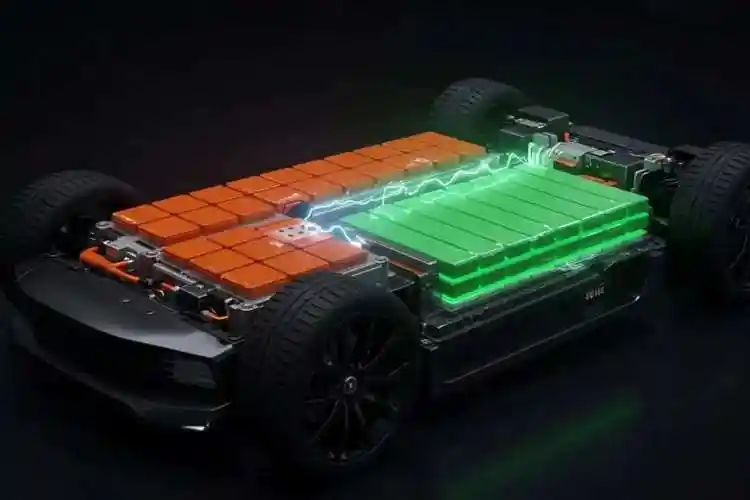
According to test data, CATL’s sodium-ion battery, paired with its third-generation CTP (Cell to Pack) technology, delivers a pure electric range of over 400 km. Thanks to CATL’s intelligent BMS management strategy, the displayed range accurately reflects actual performance—"what you see is what you get." The battery’s cell-level energy density reaches up to 175Wh/kg, the highest in the industry.
The vehicle equipped with CATL’s new sodium-ion battery demonstrates exceptional cold-weather performance: at -30°C, the vehicle’s discharge power is nearly three times higher than that of a comparable lithium iron phosphate model. At -40°C, the battery retains over 90% of its capacity, and it can still discharge stably even under extreme conditions of -50°C.
CATL’s sodium-ion battery is designed for broad compatibility across multiple brands, balancing flexibility and performance upgrades, enabling the rapid rollout of various sodium-ion models in 2026. As part of its development plan, CATL aims to build over 3,000 "Choco" battery swap stations nationwide by 2026, covering more than 140 cities. In eight regions—including Beijing, Tianjin, Hebei, Heilongjiang, Jilin, and Liaoning—over 600 stations will be completed across 32 cities.
In recent years, multiple national departments—including the National Energy Administration, the National Development and Reform Commission, and the Ministry of Industry and Information Technology—have issued policy documents to support the development of sodium-ion battery industries. Policy focus has evolved from initial strategic guidance to targeted technical breakthroughs and industrialization promotion. With strong policy support, 2026 is poised to become the inaugural year for large-scale sodium-ion battery application in passenger vehicles.
Related News
- EVE has risen to the top position, with CATL being the second!
- Converting an Electric Vehicle from Lead-Acid to Lithium Battery: 5 Key Factors to Consider
- Qualified Lithium Battery Pack
- Mid-2026 Lithium Battery Industry Watch: Solid-State Batteries Accelerate...
- Lithium Battery Procurement – Technical Specification Checklist
- 48V lithium ion battery
- How should emergency light batteries be chosen?
- How Does Lithium Cell Consistency Affect the Battery Pack?
- How Do Solar Panels Work?
- Global First Sodium-Ion Battery-Powered Passenger Car Set for Mass Production!